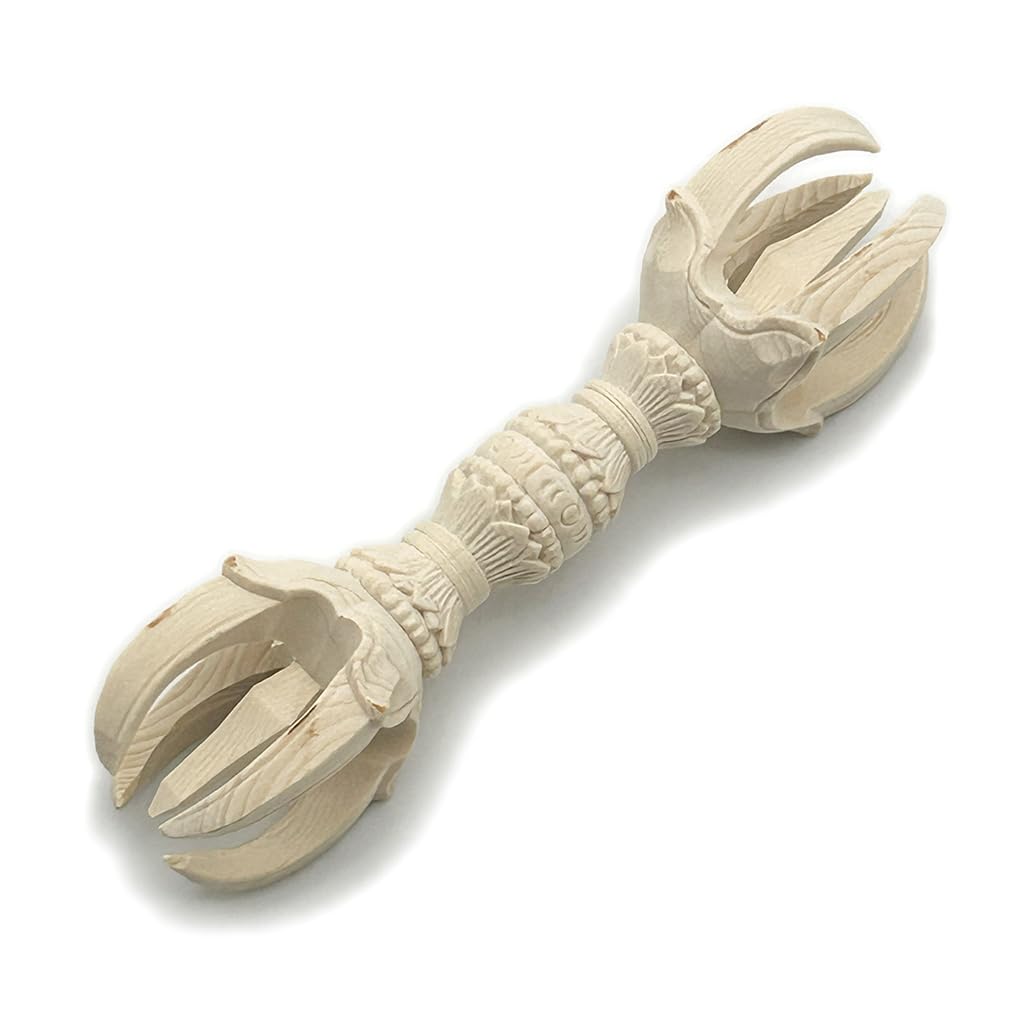
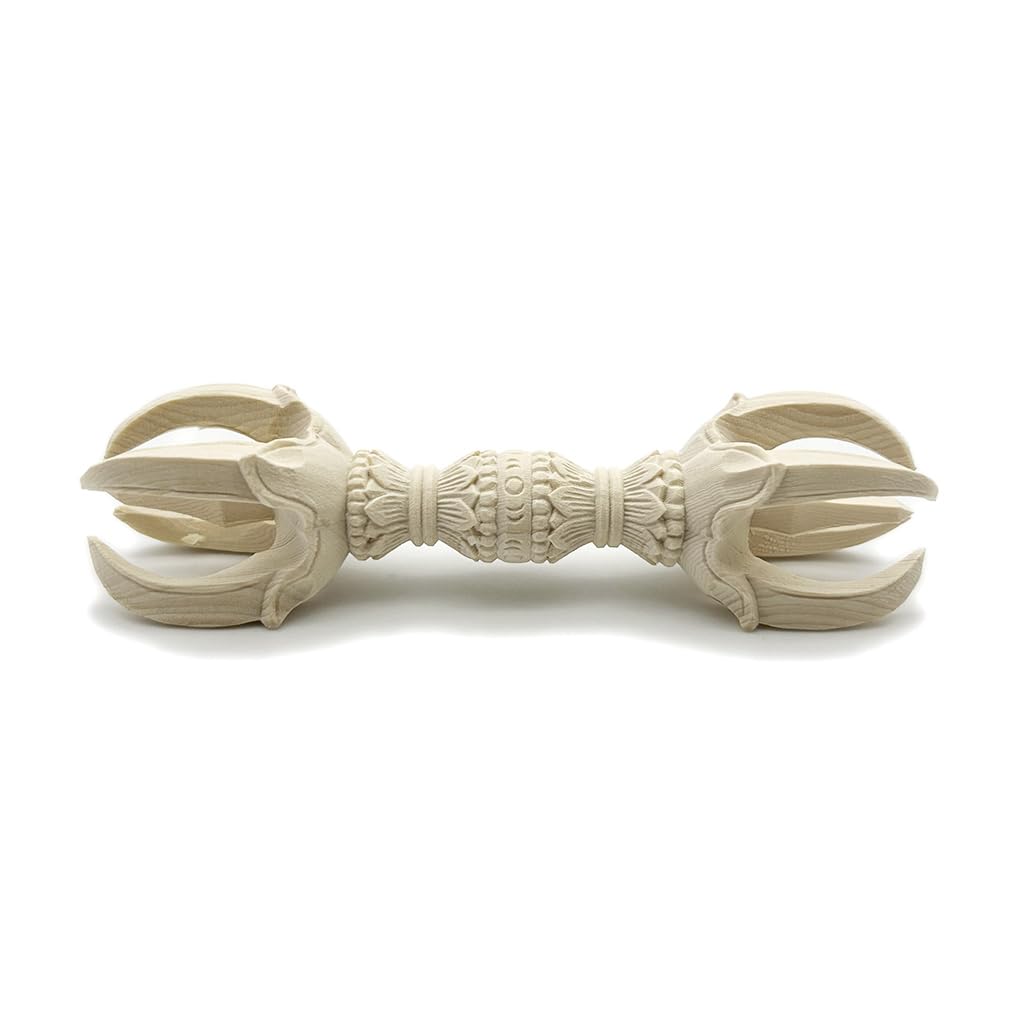
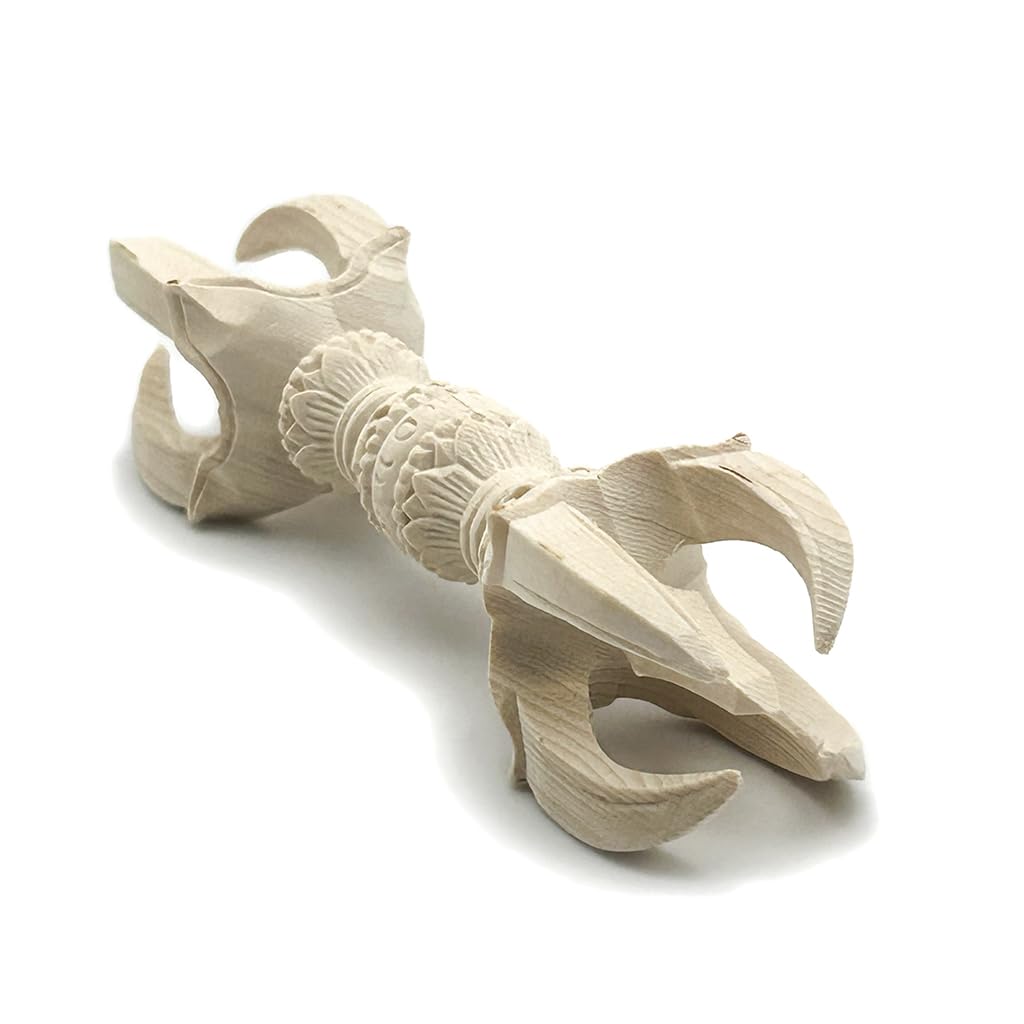
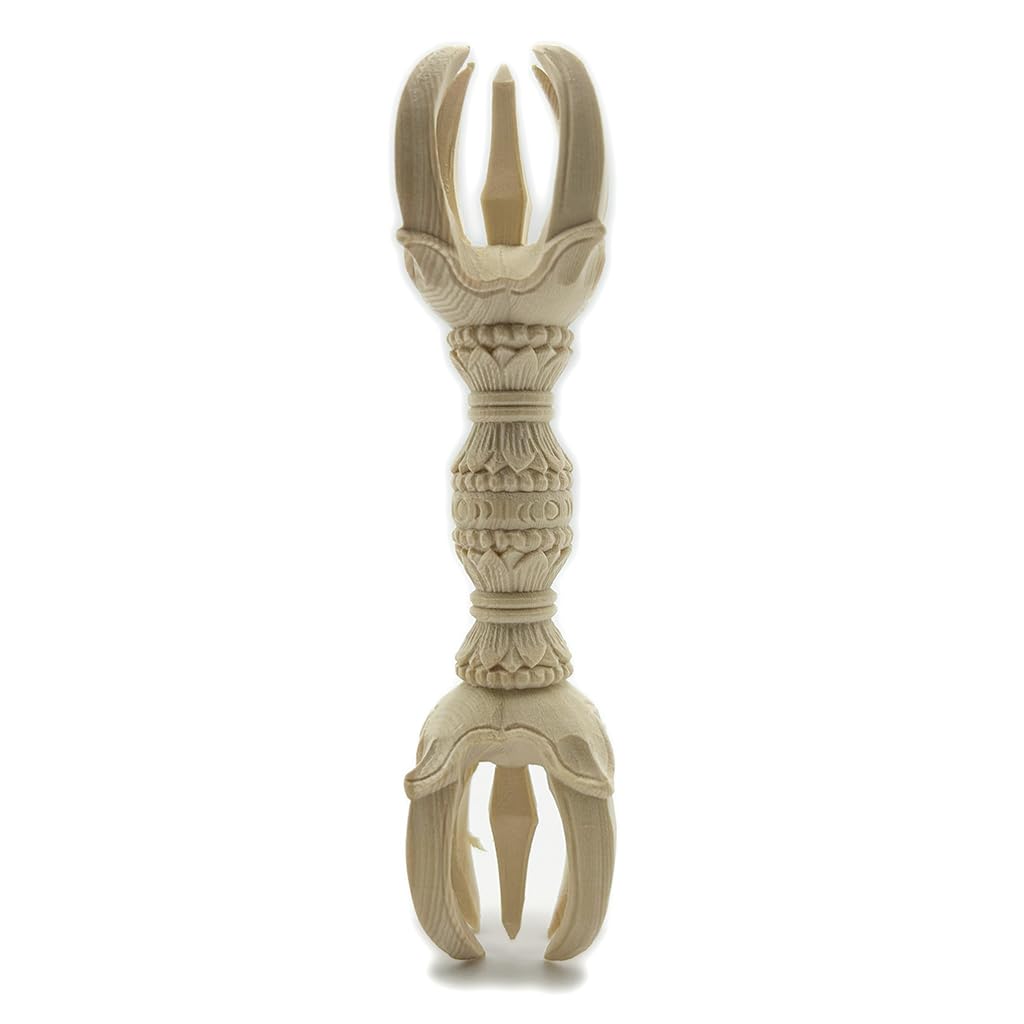
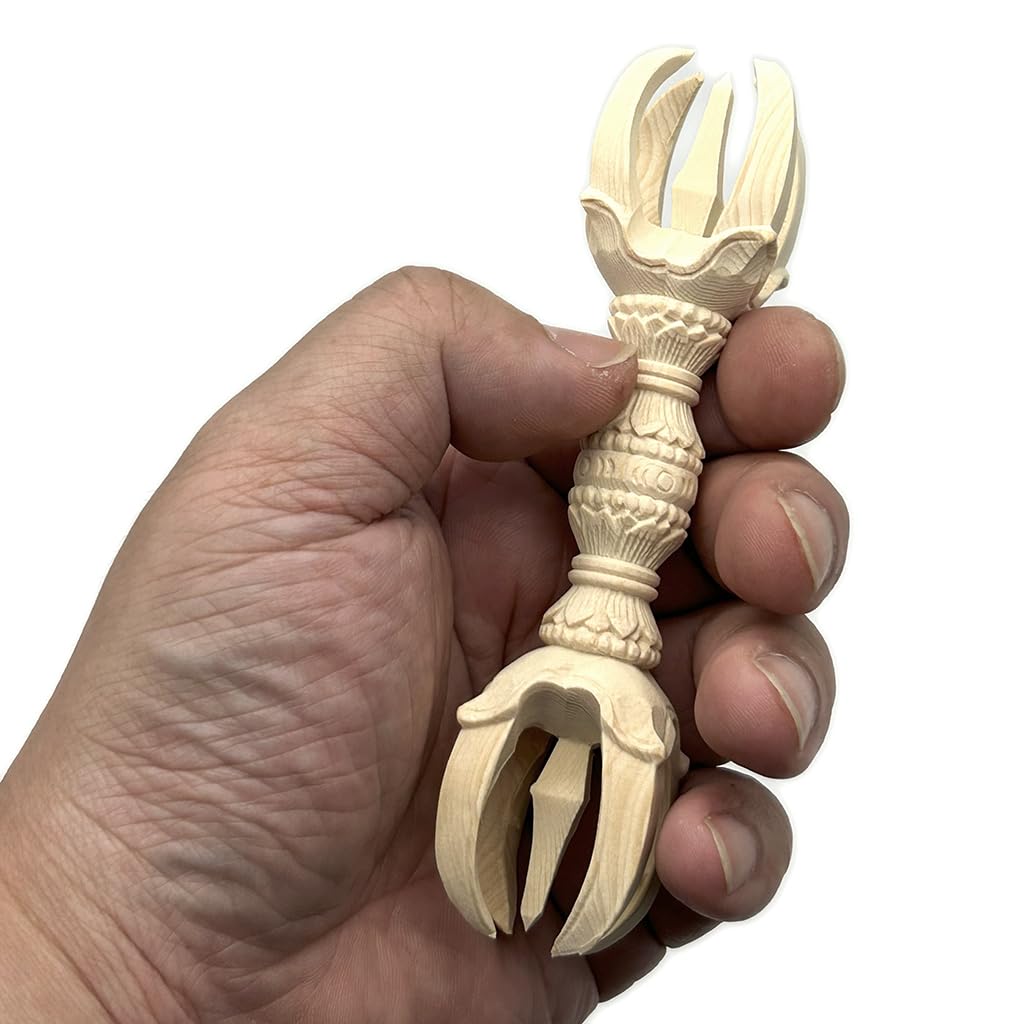
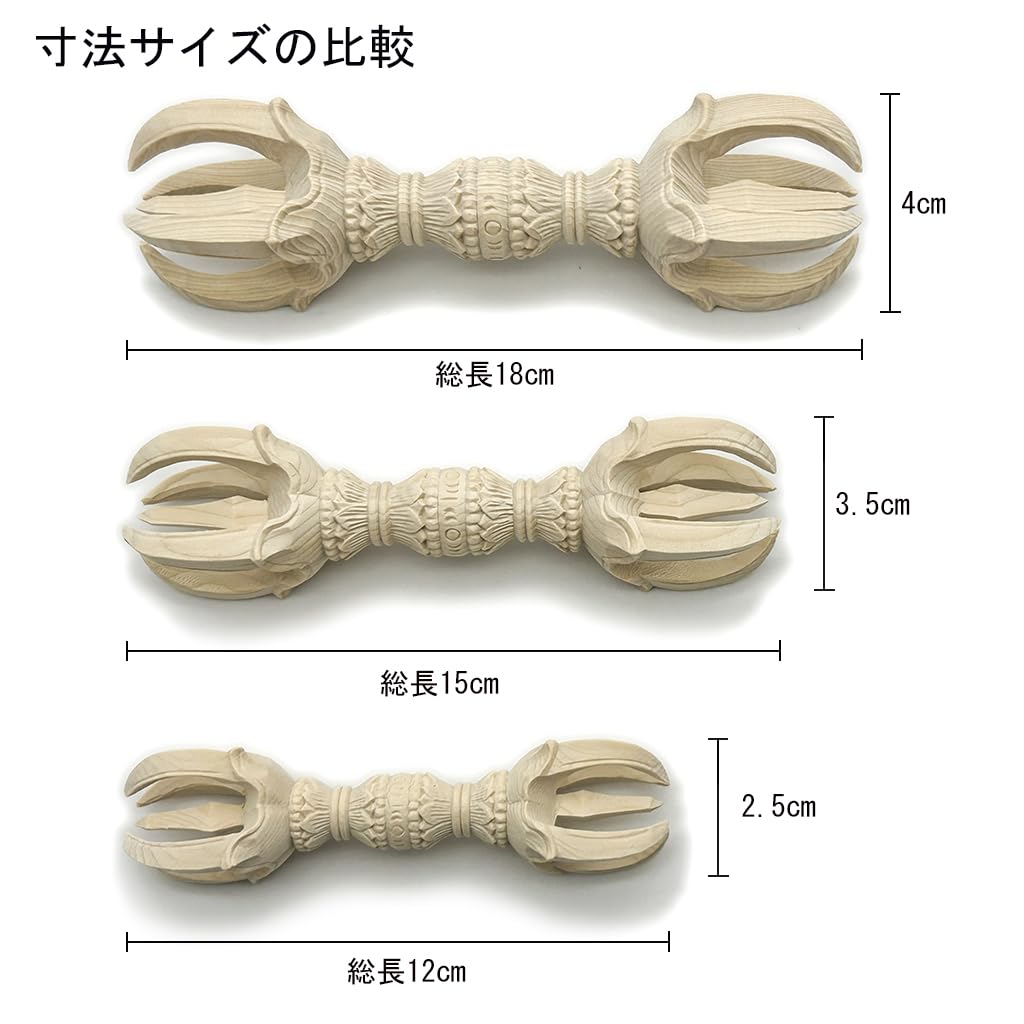
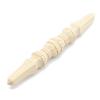
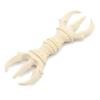
Size: Length 12cm, Height & Width 2.5cm
Material: Hinoki (Japanese Cypress)
Country of Origin: China
The five-pronged vajra is said to have been introduced to Japan by seven of the Eight Masters of the Tang Dynasty, excluding Huiyun. Originally a type of weapon (vajra) in India, it is a form of samadhi representing various deities in Esoteric Buddhism. There are various types of five-pronged vajra flags, but they represent the Bodhisattva Mind, the Five Buddhas, the Five Wisdoms, and the Ten Paramitas, and are said to destroy the ten worldly desires and attain the ten stages.
Five-pronged vajra made of cypress. Size: Length 12cm, Maximum Width 2.5cm
The vajra is a ritual implement, likening it to a weapon from Indian mythology, representing the Buddhist teachings that eradicate worldly desires and express the bodhicitta (the desire for enlightenment). It is used in esoteric Buddhist rituals, such as those of the Shingon and Tendai sects, and in Segaki (gaki) ceremonies held by Shingon, Tendai, and Zen sects. Its basic shape is rod-shaped with a central handle (the "onime" or "eye of the devil"), which is visualized as the Vairocana Buddha. Ascetics grasp the bulge of the vajra as a way to become one with the Buddha. It has spear-like blades attached to both the top and bottom. There are several variations based on the number and shape of the blades, each with its own name. The five-pronged vajra is said to have been introduced to Japan by seven of the Eight Masters of the Tang Dynasty, excluding Huiyun. Originally a type of weapon (vajra) in India, in esoteric Buddhism it is the samadhi form of various deities. There are various types of flagpole for the five-pronged vajra, but they represent the Bodhisattva mind, the Five Buddhas and Five Wisdoms, and the Ten Paramitas, and are said to destroy the ten worldly desires and attain the ten stages.
It was used to fulfill wishes, improve fortune, ward off disasters, and ward off evil. You can carry this as a talisman or keep it indoors.